Expert Stump Grinding DeLand: What You Need to Know After Tree Removal
After a tree comes down, the stump left behind can be a real eyesore. It also becomes a hazard for lawn mowers, a tripping risk for kids, and a welcome mat for termites. Many homeowners in DeLand assume that cutting the trunk flush with the ground is enough. But a cut stump still holds a living root system, and that system can send up sprouts for years. The only way to truly eliminate the problem is professional stump grinding DeLand services.
I have worked on properties all over central Florida, and stumps here present their own set of challenges. Sandy soil, high water tables, and fast-growing tree species like live oak and laurel oak create root systems that spread wide and dig deep. A stump grinder can chew through most of it, but knowing how deep to go and what to leave depends on your plans for the space. Let me walk through what stump grinding actually involves, how it differs from excavation, and what you should consider before hiring someone in DeLand.
What Stump Grinding Actually Removes
A stump grinder is a powerful machine with a rotating cutting wheel studded with carbide grinder teeth. It chips away at the tree stump from above, turning solid wood into fine chips and mulch. Most residential grinders can reach about twelve to eighteen inches below grade. That depth is usually enough to remove the bulk of the stump and the major surface roots, allowing you to plant grass or lay sod over the area.
But here is the honest truth: grinding does not remove the entire root system. The grinder teeth only reach what is directly under the stump and a few feet outward. The finer roots that extend across your yard remain in the soil. They will eventually rot, but that process takes years. In Florida, where moisture is plentiful, those decaying roots can cause a slight depression as the organic matter breaks down. You might need to top-dress the area with soil after a year or two.
Some homeowners want every trace of the stump gone, including all lateral roots. That requires excavation with a shovel or mini excavator, which is a different service altogether. Excavation costs more, disturbs more of your landscape, and often requires a permit if you are near utility lines or a city easement. Stump grinding DeLand professionals can help you decide which approach fits your situation.
When to Call an Arborist First
If the tree came down due to disease, storm damage, or structural weakness, you should have an arborist assess the stump and the surrounding soil before any grinding begins. A certified arborist can identify signs of root rot, fungal infection, or soil compaction that might affect nearby trees or your foundation. They can also mark the location of underground utility lines so the grinder operator avoids them.
I once worked on a property where a large water oak had fallen during a hurricane. The homeowner wanted the stump ground immediately so they could plant a new tree. But the arborist found that the root system had been compromised by a fungus called Armillaria. Grinding the stump without treating the soil would have spread the fungus to the new planting. We ended up treating the area with a fungicide and waiting six months before replanting. That kind of expertise is invaluable.
Many tree removal companies in DeLand offer both removal and stump grinding, so you can handle everything in one visit. If you already had the tree removed by someone else, a separate stump grinding service is easy to arrange. Just make sure the operator does a site assessment before firing up the chipper or the grinder.
Safety and Preparation for the Job
A stump grinder is not a toy. It throws debris at high speed, and the grinder teeth can catch on buried rocks or metal. The operator should always wear safety goggles, hearing protection, and heavy gloves. Before the machine arrives, you should mark any sprinkler heads, irrigation lines, or decorative lighting near the stump. Move potted plants, lawn furniture, and children's toys out of the way.
If the stump is close to a driveway, sidewalk, or the foundation of your house, the operator might need to use a chainsaw to cut the stump lower before grinding. That reduces the risk of the grinder teeth hitting concrete or brick. Some operators also use a shovel to clear dirt away from the base of the stump, giving the grinder better access to the flare where the roots meet the trunk.
In DeLand, many properties have overhead utility lines running through the yard. While the grinder itself is not tall enough to reach those lines, the operator must be careful when moving the machine into position. A ground-level assessment of the entire path is standard practice. Never assume the operator will see every hazard. Walk the area with them before they start.
What Happens to the Mulch and Debris
The grinding process produces a large pile of wood chips mixed with soil and bark. That material is excellent mulch for flower beds, but it can tie up nitrogen if mixed directly into garden soil. Many homeowners ask the operator to spread the mulch over the ground stump area as a natural weed barrier. Others prefer to have it hauled away so they can plant grass right away.
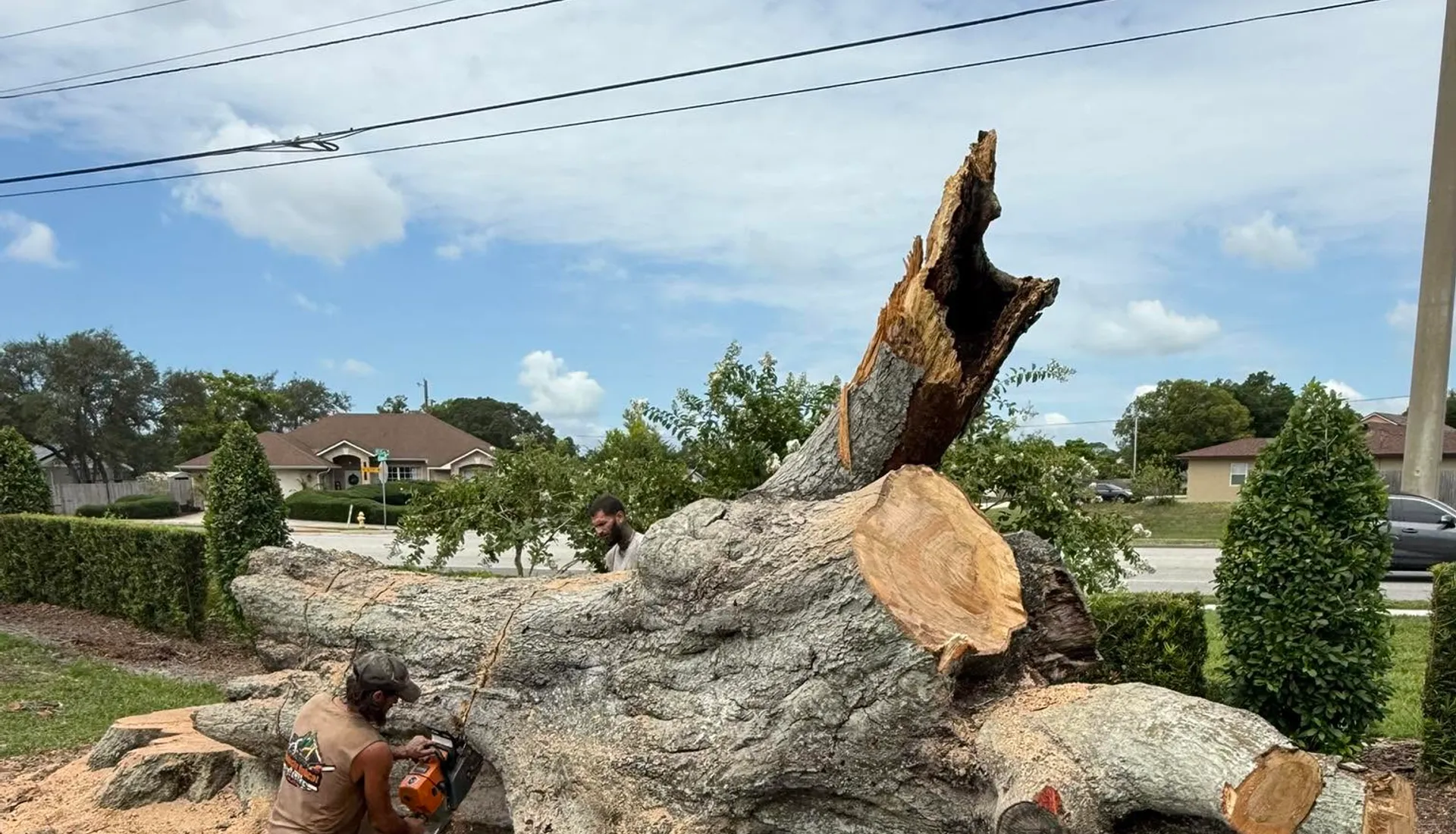
If you choose to keep the mulch, spread it no more than two inches deep over the stump site. Deeper piles can smother the lawn and attract fungus. Over time, the chips break down and improve soil structure. I have seen properties where the old stump site became the richest spot in the yard after a few years, simply because the wood chips decomposed into organic matter.
For large stumps, the amount of debris can be surprising. A single oak stump twelve inches in diameter can produce several wheelbarrow loads of chips. Plan ahead for where the chips will go. If you have no use for them, the stump grinding company can almost always haul them away for a small additional fee.
Permits and Regulations in DeLand
DeLand has specific rules about tree removal and stump grinding, especially if the tree was located in the right-of-way or on a corner lot. Some species are protected, and you may need a permit even to grind the stump after a legal removal. The city also has regulations about the depth of grinding near sidewalks and curbs, because shallow roots can heave concrete over time.
I recommend calling the DeLand planning department before scheduling any work. Ask whether a permit is required for stump grinding in your specific location. If the stump is from a tree that was removed under an emergency tree removal order, the rules might be different. A reputable stump grinding service will be familiar with local codes, but ultimately the responsibility falls on the property owner.
Is Stump Grinding Worth It?
For most homeowners in DeLand, the answer is yes. A ground stump stops sprouting, eliminates tripping hazards, and lets you reclaim that part of your landscape. The cost is modest compared to the long-term annoyance of dealing with a stump. If you plan to sell your home, a yard free of stumps looks larger and better maintained.
That said, stump grinding is not always the best option. If the stump is very small - say, under four inches in diameter - you can often remove it yourself with a shovel and an axe. If the stump is located in a wooded area where you never go, you might prefer to let it rot naturally. And if the root system has already caused damage to a sidewalk or driveway, you might need full excavation and concrete repair anyway.
But for the typical suburban yard in DeLand, professional stump grinding DeLand services are the smart choice. They save you hours of labor, spare your back, and leave a clean result that improves your property. Just make sure you hire someone who uses modern equipment, wears proper safety gear, and takes the time to do a thorough site assessment.
Final Thoughts on Stump Grinding DeLand
Tree work is full of trade-offs. Removing a tree is only half the job. The stump left behind can be an ongoing problem if you ignore it. Grinding it out is a straightforward solution that works well in Florida's sandy soils. It respects your landscape, keeps your lawn intact, and eliminates the need for constant maintenance.
Whether you are dealing with a single stump from a storm-damaged tree or a whole row of stumps from a lot-clearing project, the same principles apply. Assess the site, check for utility lines, get the right equipment, and plan for the debris. A good operator will walk you through each step and answer your questions. With the right approach, you can turn an eyesore into a blank canvas for your next landscaping project.